
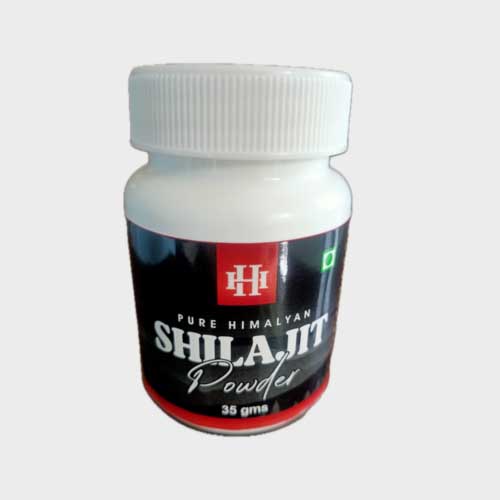
Himnatural Pure himalayan Shilajit Powder 35 g
Catgory: Herbal & Natural Products| Business Type | Manufacturer & Supplier |
|---|---|
| Country of Origin | India |
| Color | Available in Different Colors |
| Size | Different sizes available |
| Preferred Buyer From Location | Worldwide |
| Packing Type | Export Standard Packing or as required. |
| Delivery Time | As required |
Why Choose Us?
Our satisfaction means to us We want to build a relationship with you, and not just a transaction. We want you to have a memorable experience through our entire interaction, and we strive to make that happen
Available 24/7
Creative ideas
Customer Focused
Fast Delivery

Quick Enquiry

Fill out the form, Our Team will contact you for further details.

Shilajit is a sticky material that emerges from the fissures in Asia’s high mountain ranges. It is composed of plant, mineral, and animal matter.
The temperature and the location of shilajit determine its precise composition. Usually, it includes important fatty acids, vitamins, minerals, and amino acids. The organic acids humic and fulvic acid are also present. It has antioxidant properties and is frequently used as an adaptogen in Ayurvedic medicine.
Although there is not any solid scientific proof to back up these claims, people utilize shilajit for a variety of ailments, including osteoporosis, fractures, male infertility, Alzheimer’s disease, and muscle strength.
Shilajit should not be confused with fulvic or humic acid. These are not interchangeable.
Applications and Efficiency
For the SHILAJIT overview, we do not presently have any information.
Adverse Reactions
When taken orally, processed shilajit may be safe in dosages of up to 500 mg per day for up to 48 weeks or 2 grams per day for 45 days. It appears to be tolerated nicely. However, there is not enough trustworthy data to determine the safety of raw or unprocessed shilajit or to identify any potential negative effects.
When shilajit is used topically, there is insufficient trustworthy data to determine its safety or potential adverse effects.